NONGZAO Practice • Digital Weaving
“In a desert of absolute precision, an accident can be a spring.”
Original Text | Xu Gang • NONGZAO Field Notes


I · Between Warp and Weft
For the Bouyei people, weaving has long been more than a craft of making. It is a way for a community to hold its memories and define itself.
“Cloth is produced in abundance in the lands south of Yue.”
The Treatise on Geography in the Book of Han contains early written records of textile production in the southwest of China. The ancestors of the Bouyei people lived in this region, carrying forward an ancient weaving tradition. More than two thousand years have passed, yet the cotton thread has never been broken: from hand to shuttle, from shuttle to cloth, from cloth to garment. In time, these garments came to bear the distinctive marks of a people's identity. Every crossing of warp and weft carried patterns into the cloth, while also recording the history of migration and continuity across generations.
During the Daoguang reign of the Qing Dynasty, Zhang Guohua, a Fugongsheng senior scholar, captured the flourishing cotton-weaving culture of the Bouyei people in Wangmo in a poem:
“Three seasons gather beneath the changing winds and moon;
White cotton travels downriver from the fields.
The village inns recall the customs of Guangdong;
Cotton blossoms spread across the land, white as far as the eye can see.
As the loom moves, so too does the sound of reading;
The Wang family begins to win distinction in both civil and military examinations.”
Local scenery, trade, farming and scholarship all find their place in these lines. Cotton bolls spread across the hills like snow, then travelled downstream for trade, sustaining local livelihoods and continuing the life of a community rooted in this land.


The writer Huang Jinming recorded something more intimate: in Bouyei villages in Wangmo, after returning from the fields at dusk, family members would gather around the light of a small oil lamp. Women spun thread and worked the loom late into the night. Shuttle after shuttle, back and forth without end, the ordinary days of life were woven by hand into something enduring.
Today, more than a hundred historic weaving villages remain in Wangmo County, Guizhou Province. Waini, a traditional local variety of cotton cultivated by the Bouyei people, still grows in the hills, while indigo gardens continue to yield their deep, quiet blue. The annual production of local handwoven cloth is estimated at around 100 kilometres in total length, with a width of 65 centimetres. Wangmo lies more than two hundred kilometres from Guiyang. The cloth woven here in a single year could stretch across half the journey home.
My interest in weaving began during a field study in southwestern Guizhou. After that, I gradually came to know this community and waited for an opportunity for the experience to take root and develop into practice.








II · The Logic of Structure
A craft takes root in a place, in the body, and deep within time.
The more I travelled, the more I came to realise that weaving among the Bouyei people is not simply their craft. It is also one of humanity's oldest ways of constructing structures.
Weaving began with the necessities of survival. In the everyday life of agrarian civilisation, people needed to store grain, shelter themselves from the weather, bind firewood and mark the boundaries of fields. Vines, grasses, bamboo strips and hemp fibres — supple materials taken from the land — were shaped by human hands into the earliest structures. Weaving did not begin as decoration. It emerged from the demands of living: one of the most elemental forms of interaction between people and the land.
Embedded in this practice is a way of thinking structurally: separate strands are interlaced and brought together to form a whole with order and the capacity to bear weight.
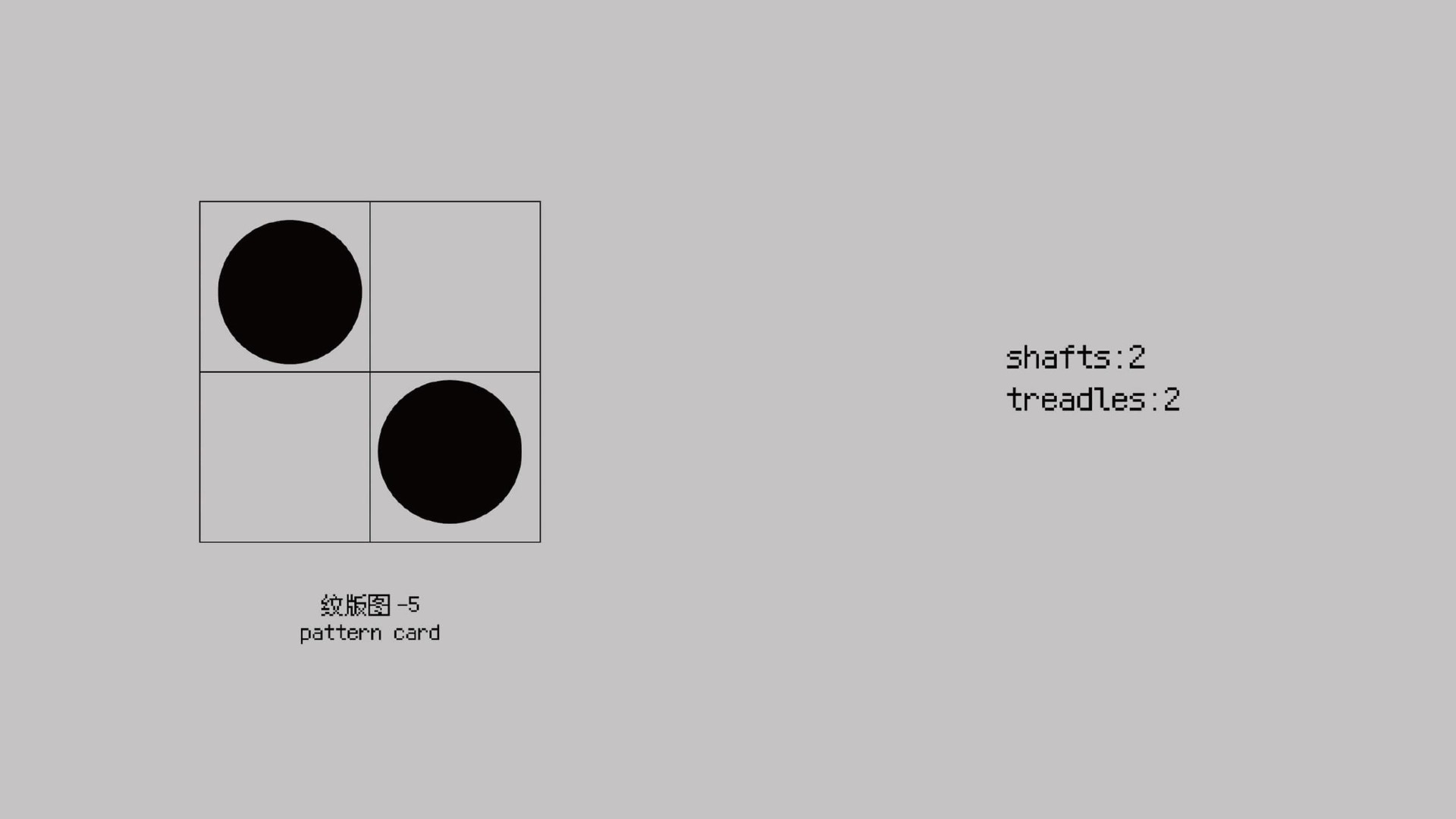


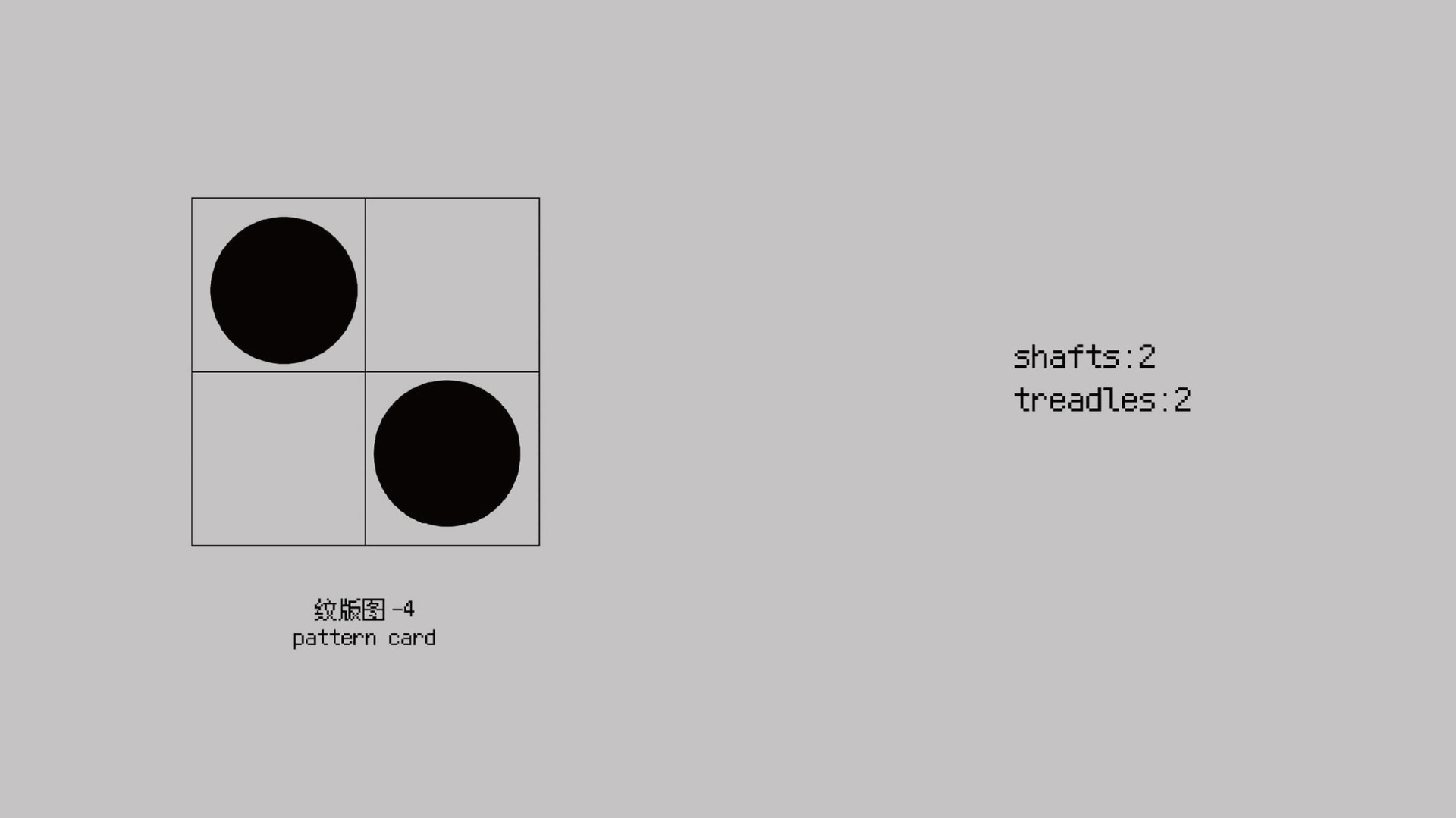


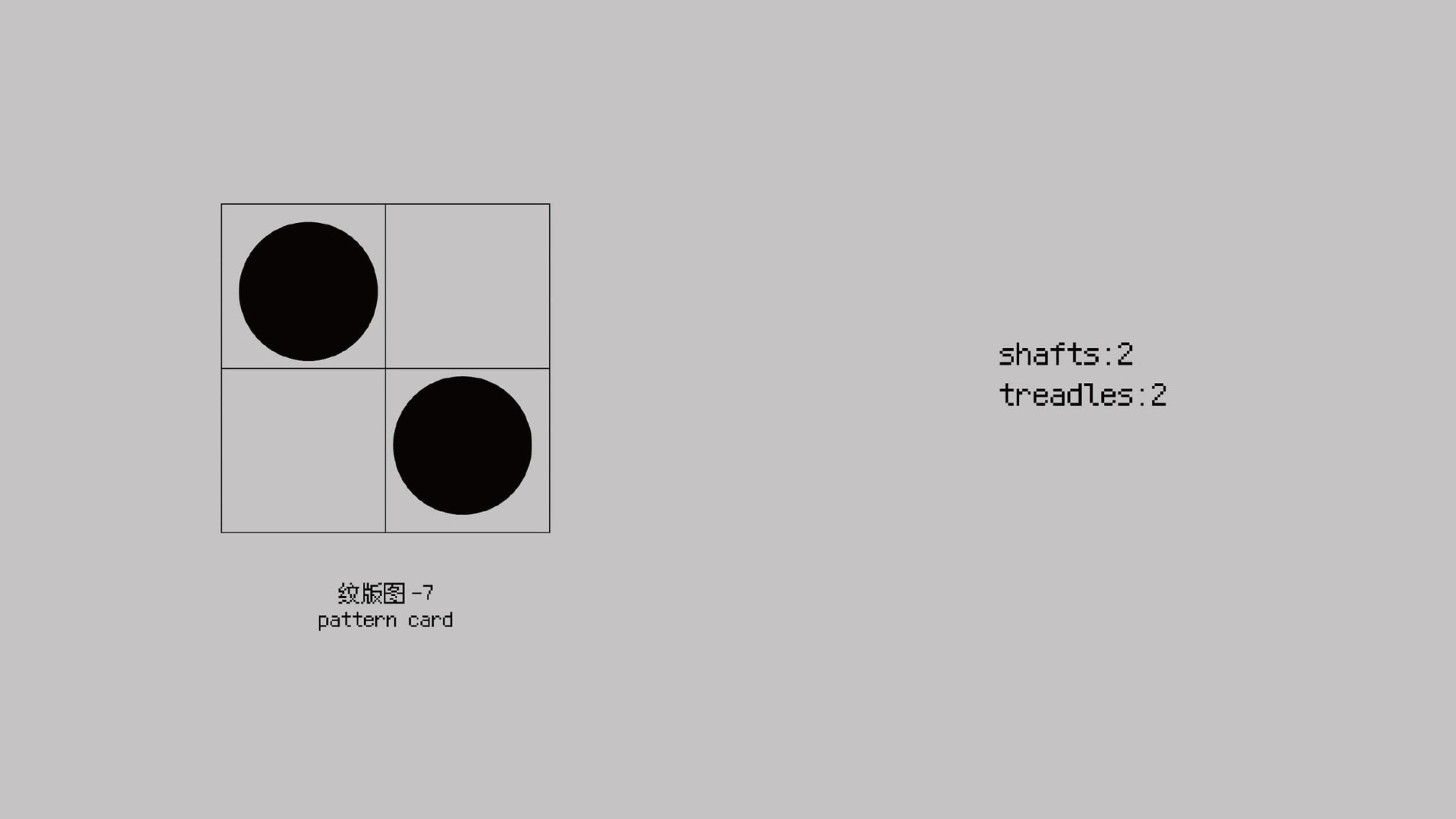


Weaving is a technique. Yet I prefer the word craft. Technique is knowledge that can be explained and passed on: when to cut a vine, how to split bamboo, how to form a particular pattern step by step. Craft, however, takes root in a place, in the body, and deep within time. It emerges through years of adjustment between a particular community and particular materials. The movements of the hands, the temperament of the material, the angle of a tool and the humidity of the environment are all encoded in the rhythm of weaving.
It is a system of knowledge remembered by the body, and a way of living that situates people in a particular place, in direct engagement with the materials around them.
In the hands of a craftsperson, fibres bend into curves that are not entirely calculated, but also guided by touch. The handle of a bamboo basket, held day after day, gradually becomes smooth and polished. It is the friction of time, left upon the material.
At its core, weaving is a structural system formed by the interlacing of warp and weft. Patterns and colours are the outward expression of this underlying logic. The warp forms the framework, extending along the length of time; the weft travels back and forth, creating fabric through its crossings. Once the order of warp and weft is established, countless variations can emerge within a small space. Density shifts, colours move, patterns change, and the emotions and memories carried by the fabric take on different forms.




III · Grids and Rice Fields
The warp and weft moving through our hands and the field ridges stretching beneath our feet may be expressions of the same underlying order for dividing space.
Every ethnic community has a system of colours deeply embedded in everyday life. Among the Bouyei, blue comes from indigo grown beside the fields, red from minerals found in the mountains, and yellow from grasses and plants gathered in autumn. These are not abstract codes on a colour chart, but colours drawn from the land and tangible to the touch. The depth of each dye bath depends on rainfall, leaves, the number of dyeing cycles and the duration of exposure to sunlight. Every shade may hold traces of a particular year, a particular season, and the hands that worked it.
Gézihuā (Checkered Grid Pattern) is one of the most representative traditional motifs in Bouyei handwoven cloth from Wangmo. In his Bamboo Branch Lyrics of Zhenfeng Prefecture, Tan Shilu, a Qing Dynasty scholar from Guizhou, wrote:
“By the Wangmu River, the currents turn and flow;
Where the old land of the peaches once lay, people make their homes.
Looms are joined, cloth is dyed in different colours;
Here, the checkered grid pattern is found in abundance.”
Horizontal and vertical lines, a simple and regular arrangement: this is the character of the Gézihuā pattern. It relies neither on elaborate totems nor on mysterious symbolism. At its heart, it is simply a grid.
As the shuttle passes back and forth, horizontal and vertical threads intersect to form right angles. The grid grows from within the structure of the fabric itself. The Bouyei people may never have deliberately set out to “design” this pattern, yet through the daily repetition of weaving, the paths of intersecting warp and weft became an order on the cloth. Over time, variations emerged within the regular grid. One square became darker, another lighter; one line was woven more densely, another left more open. Within a disciplined order, a lively rhythm took shape; within that repeated rhythm, an unassuming beauty gradually emerged.


he patterns of Bouyei cloth are rooted in the everyday textures of a particular landscape. Grain patterns, osmanthus flowers, plum blossoms, tung flowers and sugarcane motifs: these are not abstract decorations imagined in isolation, but forms closely connected to harvests in the fields, flowers and trees around the courtyard, and crops growing in the surrounding hills. The Bouyei people weave the changing seasons and the details of everyday life into the fabric, carrying the memory of an entire landscape on their bodies.
Starting with the Gézihuā pattern, I began to ask about the local ecology and ways of life behind it. Why did this particular grid emerge here? Why does this indigo take on these particular shades? What gives rise to the act of weaving and wearing, and to whom is its meaning ultimately passed on? To understand each square and each thread is also to understand the relationship between people and the land. Studying the checkered grid pattern is not merely a study of a motif. It is an inquiry into how the Bouyei people transform their relationship with a particular landscape into everyday objects through the medium of thread and colour.
Bouyei villages are built among mountains and beside water. They are communities with a long history of rice cultivation. Rice farming runs through local customs, beliefs and daily life. Transplanting seedlings, harvesting, rituals and songs all follow rhythms shaped by water and the growth of rice.




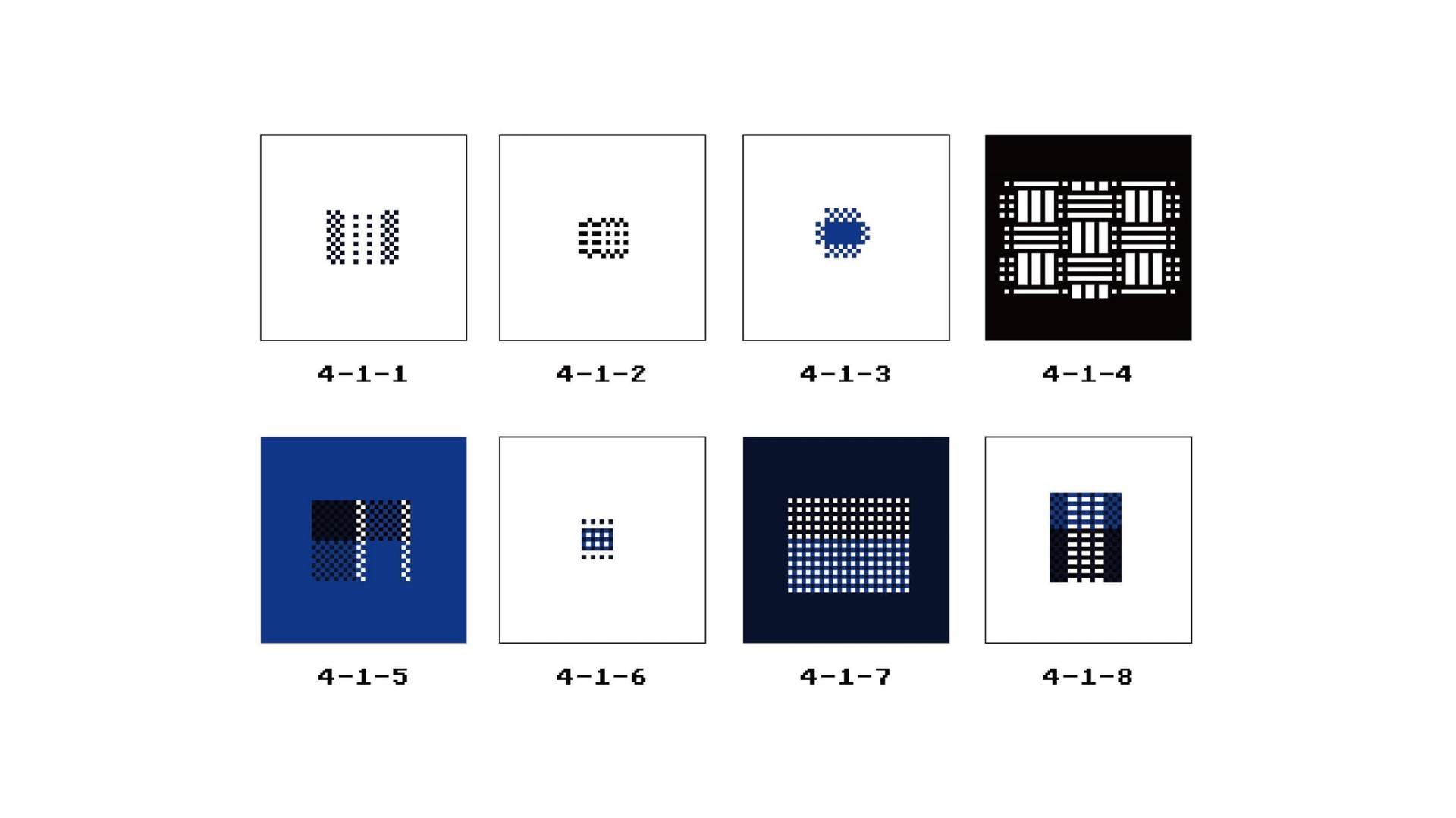
When we digitally enlarged the patterns of local woven cloth, an intriguing correspondence emerged. The pixelated graphic texture resembled rice fields seen from above, with their intersecting paths and boundaries. The Gézihuā pattern does more than resemble a paddy field. It led me to consider whether the warp and weft of fabric and the ridges that divide fields might share a common logic for organising space: the threads moving through our hands and the field ridges stretching beneath our feet may be expressions of the same underlying order for dividing space.
Rice fields are orderly. Field ridges establish boundaries, irrigation channels guide the flow of water, and every element has its place. Yet the landscape also holds changes that cannot be fully anticipated: rice plants grow to different heights, water reflects the shifting light of morning and evening, and clouds move without a fixed pattern.
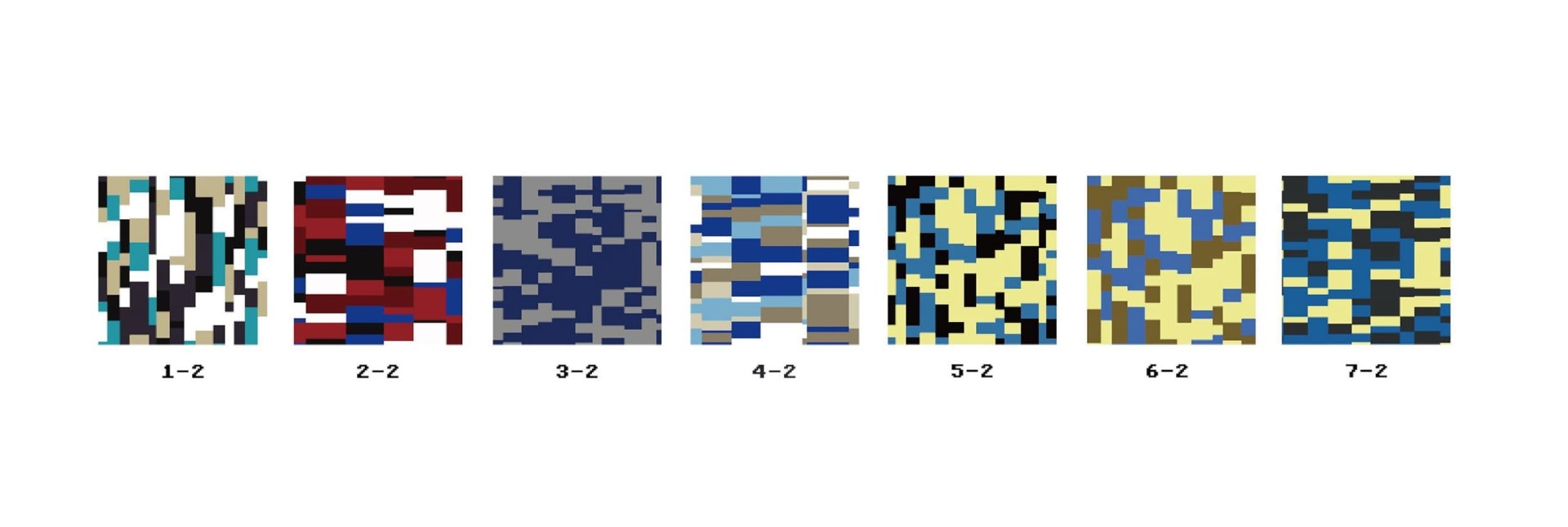
Handwoven patterns follow the same disciplined logic of warp and weft, yet they are also shaped by the experience and physical condition of the person weaving. We introduced digital models to bring random divisions, extractions and misalignments into the regular grid. Every adjustment of a parameter became another round of experimentation, with the possibility of producing a pattern that had never existed before.
What makes digital weaving compelling is its ability to open a new space for exploration between human hands and machines, regularity and randomness, tradition and the unknown. Between the checkered patterns of cloth and the fields and waters of the landscape, a new ground emerges that can be cultivated in both directions. The digital model does not seek to replace the existing order, but to allow that order to grow in new ways, creating room for the unexpected.


IV · Digital Weaving
Both are doing essentially the same thing: using a continuous line to construct an entire material world.
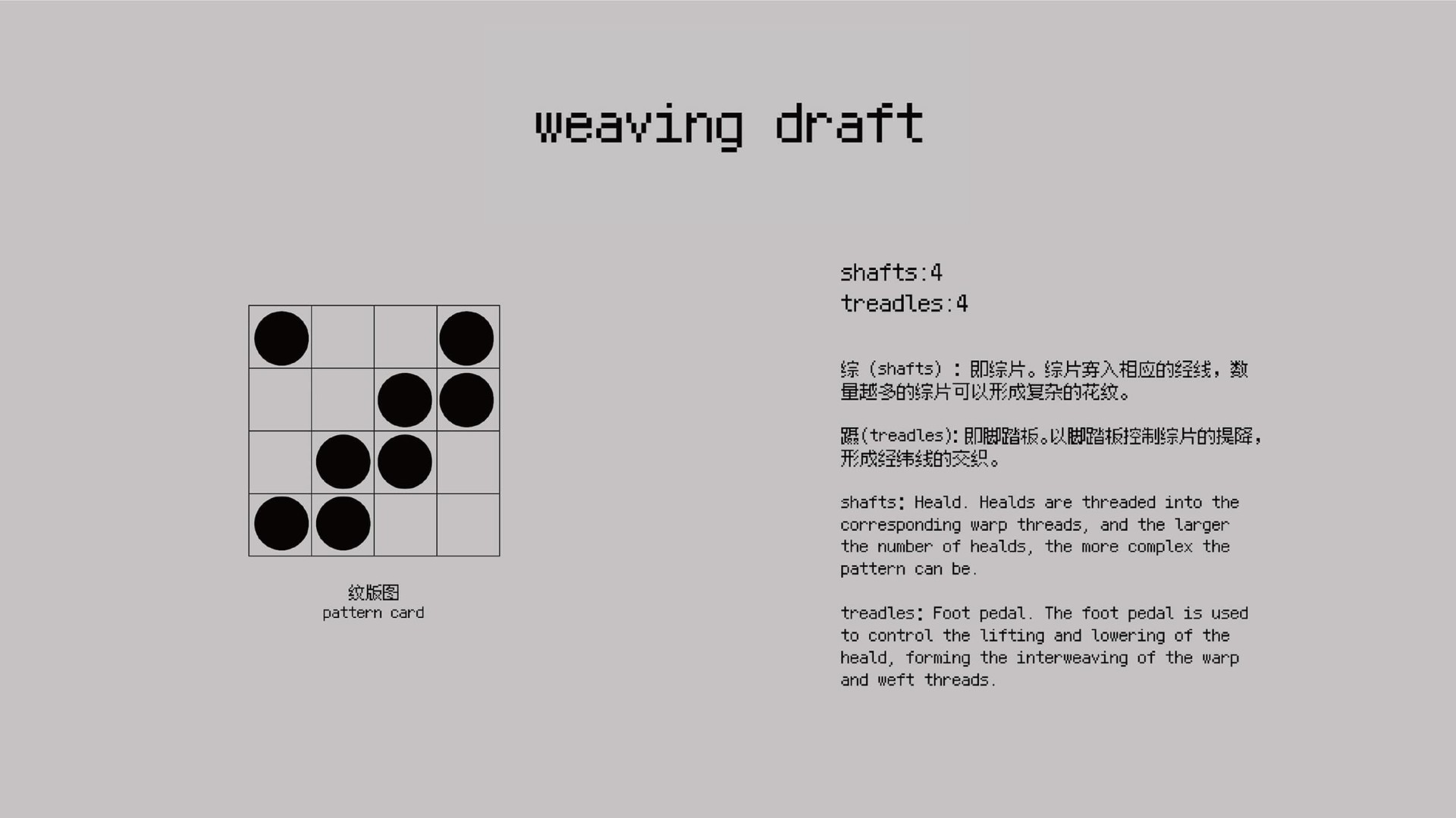
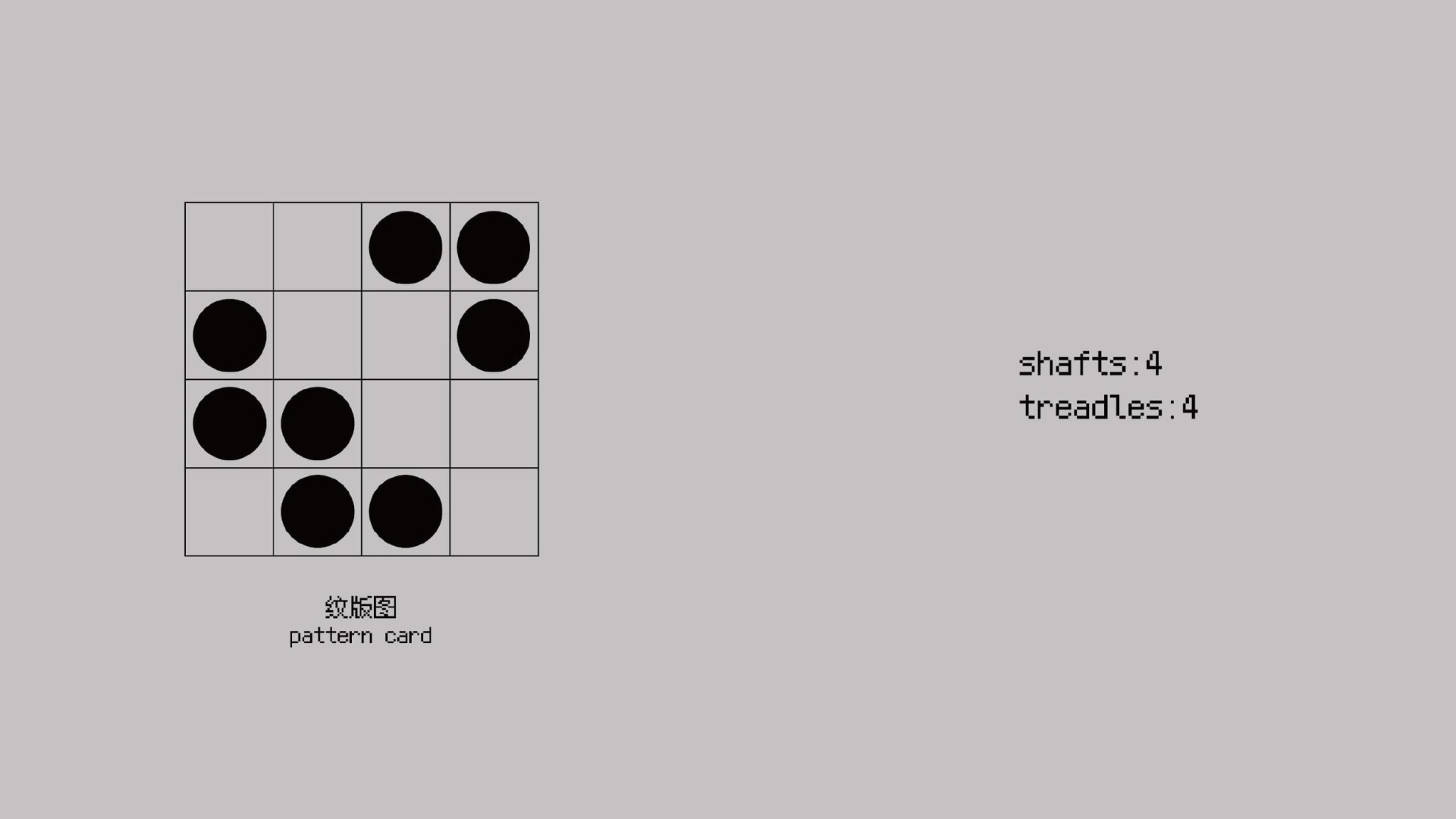
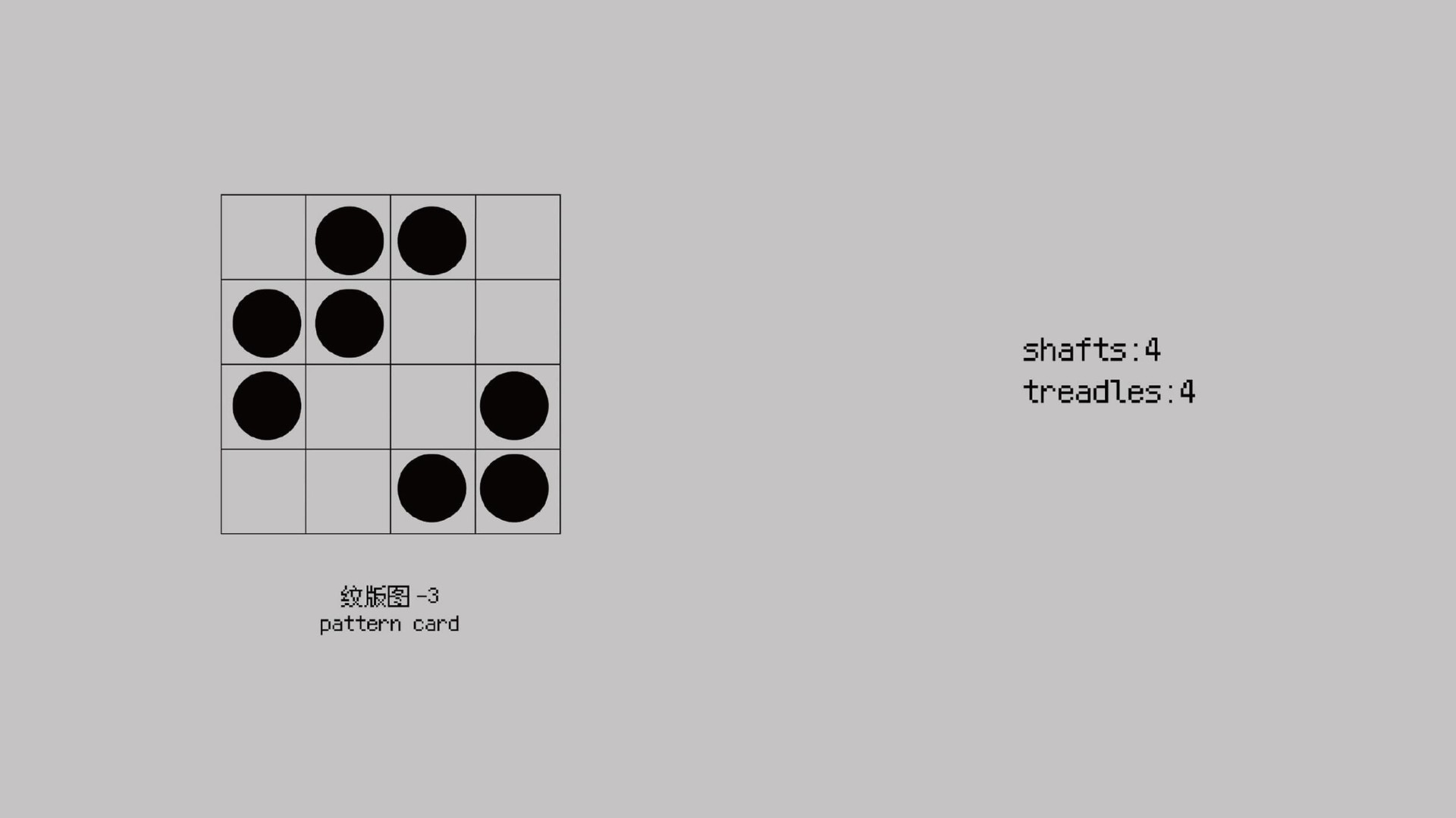
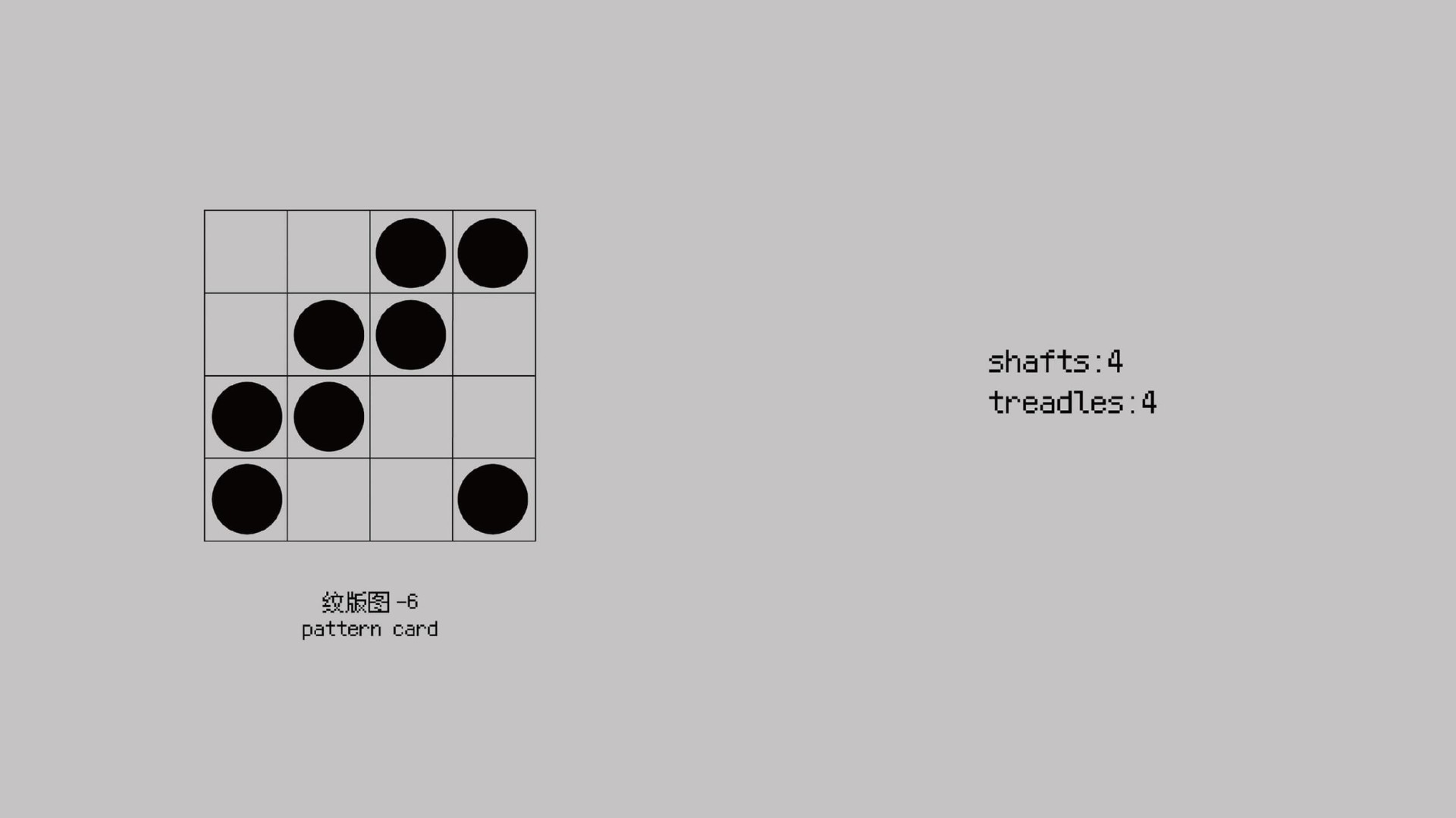
We began by deconstructing the structural patterns of traditional Bouyei weaving, extracting their underlying rules and translating them into editable, extensible geometric forms. The first step was to remove colour. Colour carries stories, but it can sometimes obscure the underlying framework. Once colour receded, the order beneath the patterns became visible: sequential arrangements, mirrored reversals and repeating units. Through analysis and documentation, weaving principles practised for centuries gradually became legible. The pattern layouts were then imported into weaving software. Through repeated testing and iteration, new patterns could be generated. The process resembled a search for notes and rhythms: each unit was a group of syllables, and each repetition formed a melody.
Then came the “arrangement”: reversing a melody, turning a passage around, tightening the rhythm, lengthening the intervals. Every operation introduced a variation, which the software translated into a visual pattern. We also introduced new variables: adding a parameter, removing a constraint, shifting one section by a grid unit, layering a texture elsewhere.
New patterns emerged from this process. They shared the lineage of traditional weaving, yet took on entirely new appearances. People might recognise the cultural character beneath them, but would find no exact counterpart among established patterns.
Drawing on field research among the Bouyei people in southwestern Guizhou, the NONGZAO team documented and organised local weaving patterns, then digitally recombined them according to different structural logics. Computer programming was used to generate derivative forms. This went beyond scanning and archiving existing patterns. The principles of handweaving were translated into algorithmic parameters, allowing patterns to grow and evolve within a set of rules.
Each time the programme ran, new patterns could emerge: some open and spacious, others dense and full; some maintaining symmetry, others developing unexpected misalignments and textures.


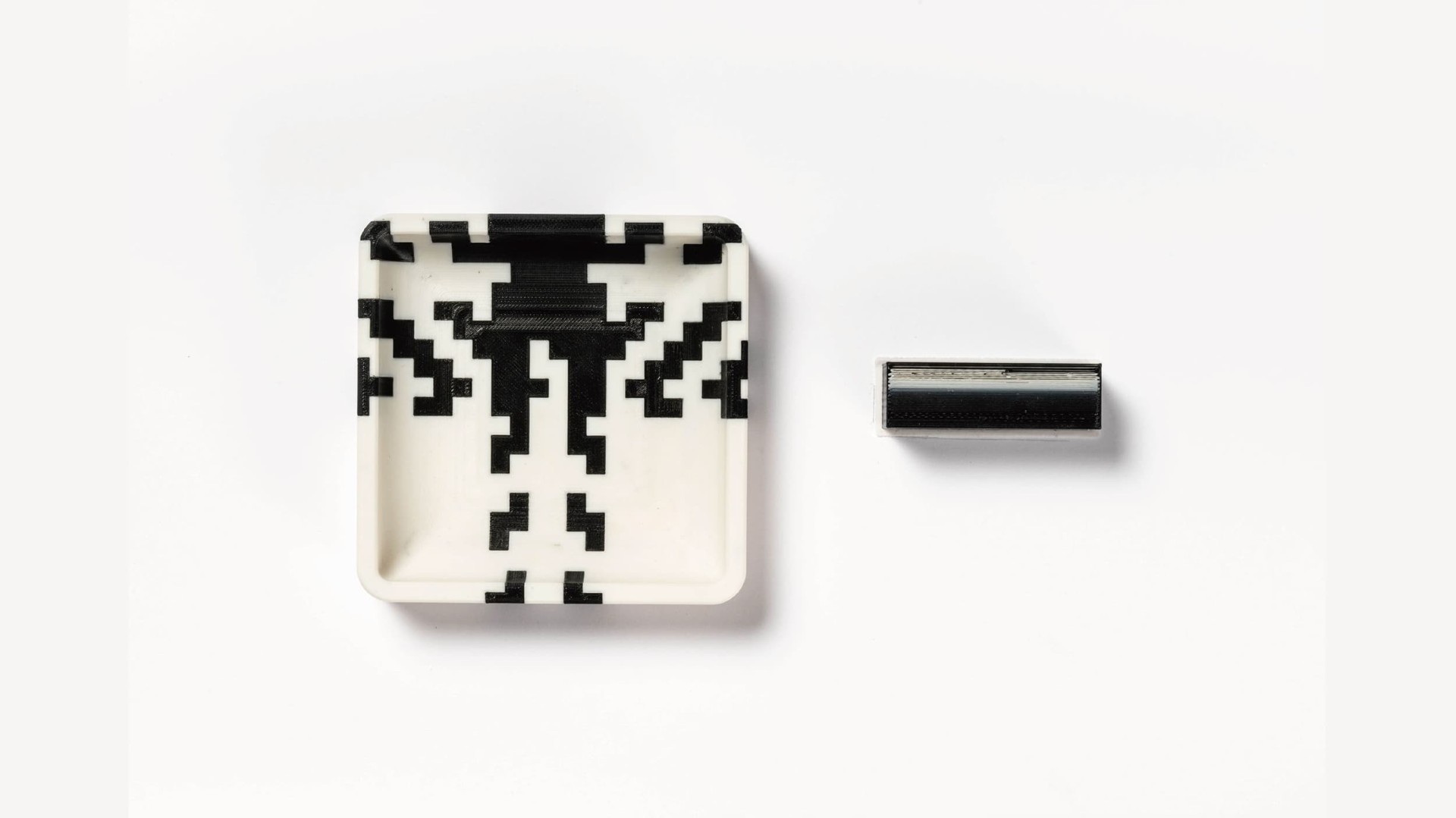


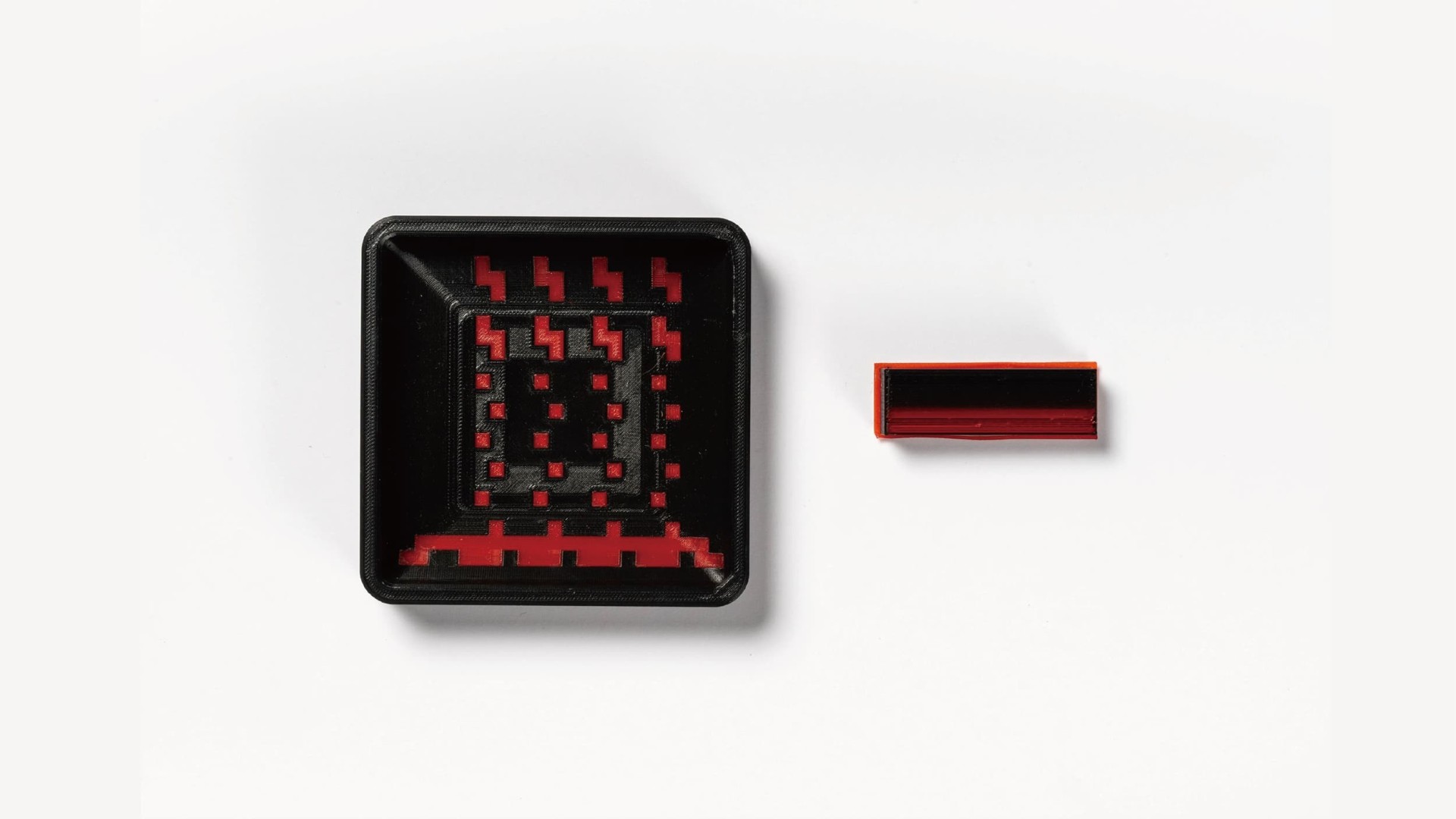

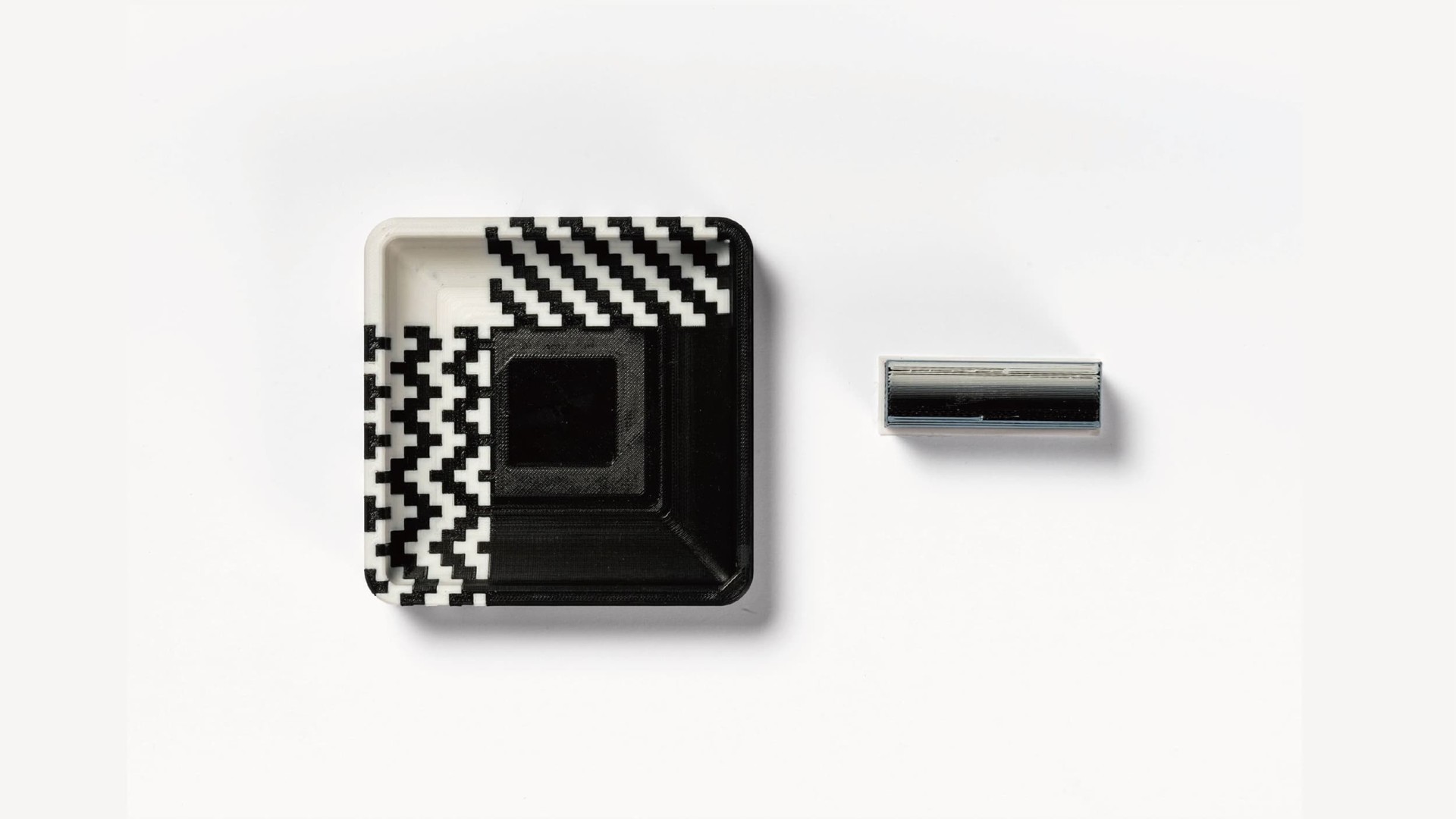


In traditional handweaving, people guided cotton thread and shuttle to create patterns. In these digital experiments, we relied on underlying rules to allow the programme to participate in generating forms. Local weaving patterns thus became more than static examples awaiting reproduction. They became a structural language that could be revisited, recombined and explored over time.
Bouyei patterns have never been merely cold geometric forms. They originate in ears of grain in the fields, flowers and trees in the courtyard, and crops growing in the hills. They are memories of a place, carrying warmth and passed down through generations. Even when translated into data, encoded in algorithms and infused with random variables, their connection to the land and everyday life should not disappear.
Rationality offers a new mirror to feeling. Within it, an ancient tradition encounters a younger, unfamiliar face — one that still comes from within itself.
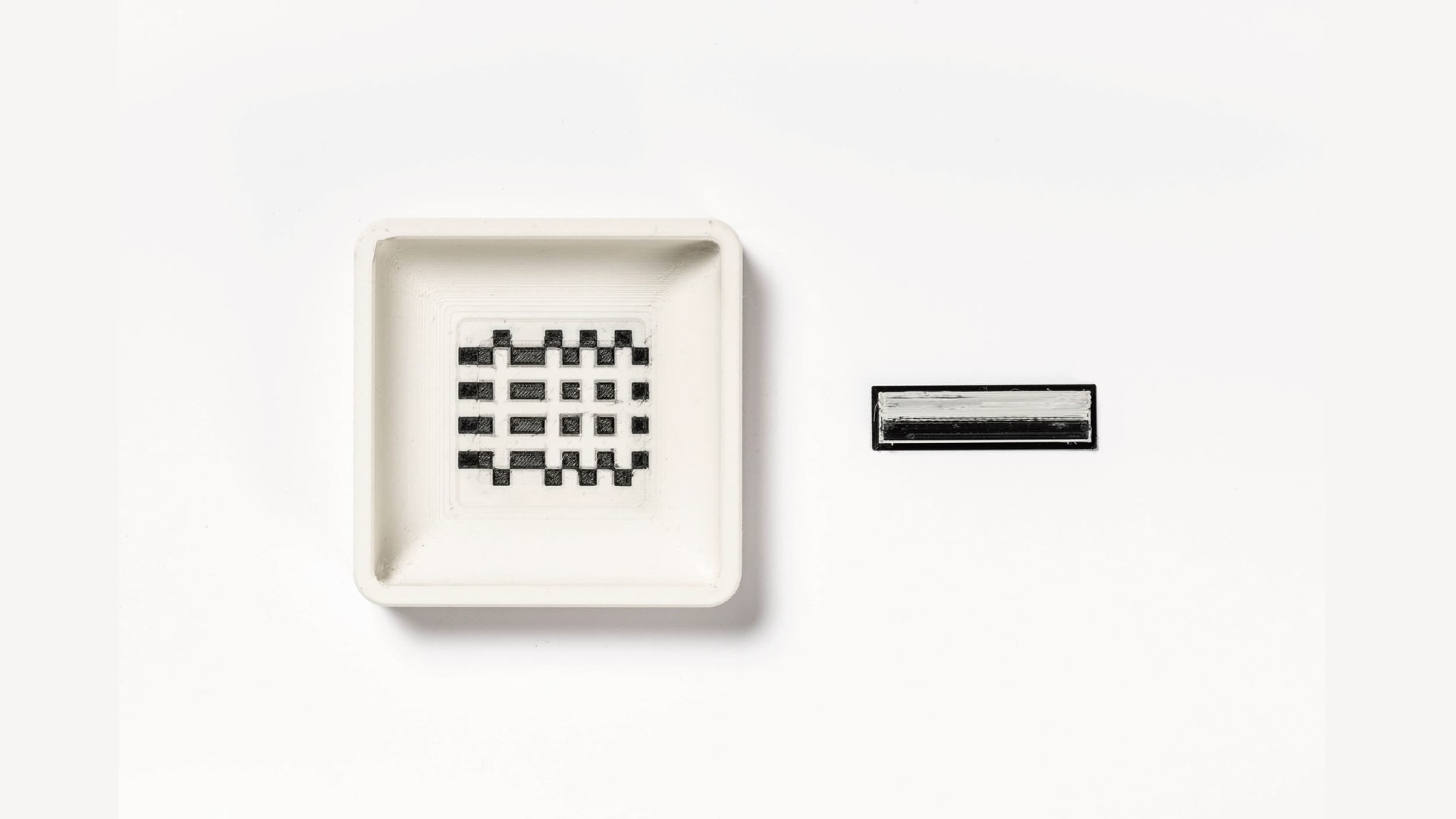
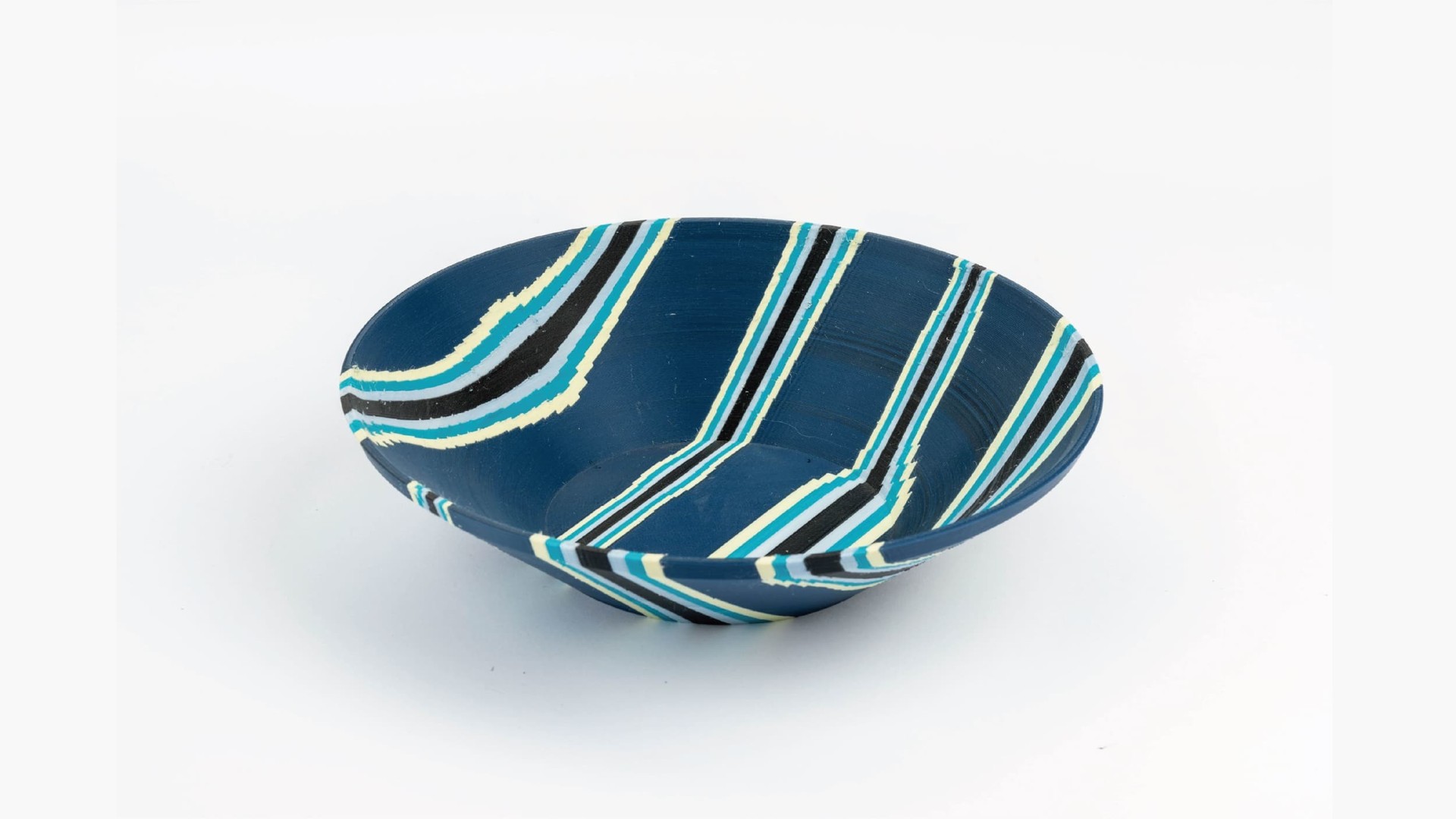
Finally, we connected the digitally generated patterns to 3D printing, translating them from digital information into physical matter. The algorithmically generated graphics were fed into a 3D printer, which used the three axes of X, Y and Z to build forms by melting and depositing a bio‑based PHA material layer by layer, turning lines into surfaces and surfaces into three‑dimensional objects.
The logical lines of the digital world thus became physical objects occupying three‑dimensional space. The materials and tools had changed, yet certain principles of making remained connected: the order of lines, the variations that emerge through repetition, and the rhythms inherent in structure.
Weaving and 3D printing reveal a relationship between two ways of forming materials that deserves further exploration. Warp and weft intersect to build a plane of fabric. 3D printing extends beyond a flat path by introducing the Z‑axis, allowing filament to be encoded by a programme, melted and shaped, then deposited layer upon layer as the form grows upwards.
The two processes are not identical, but they share certain logics of organising material through continuous paths. When the shuttle's trajectory in a village weaver's hands overlaps with the movement of a print head in a laboratory, a clear intuition emerges: both are doing essentially the same thing, using a continuous line to construct an entire material world.




V · Sound and Error
Precision is the language of machines; error is the nature of material things.
If structure can be generated, and colour can be generated, what about sound? Could sound, when linked to images, generate new textures?
The soundscape of the fields is rich and layered. Bouyei folk songs do not exist only on stages. They are also heard in humming along the field ridges, singing beside the loom, and the call‑and‑response of voices across a shared meal.
The sounds of the loom — the click of the shuttle passing through the warp, the creak of the treadle rising and falling — may seem monotonous, yet they carry an almost hypnotic rhythm. There is also running water in the fields, the chirping of insects, the rustle of a sickle cutting rice, and the cadences of local conversation. Even when the words are beyond our understanding, we can still hear the rises and pauses in the voice. All these sounds belong to the everyday life of the Bouyei people.
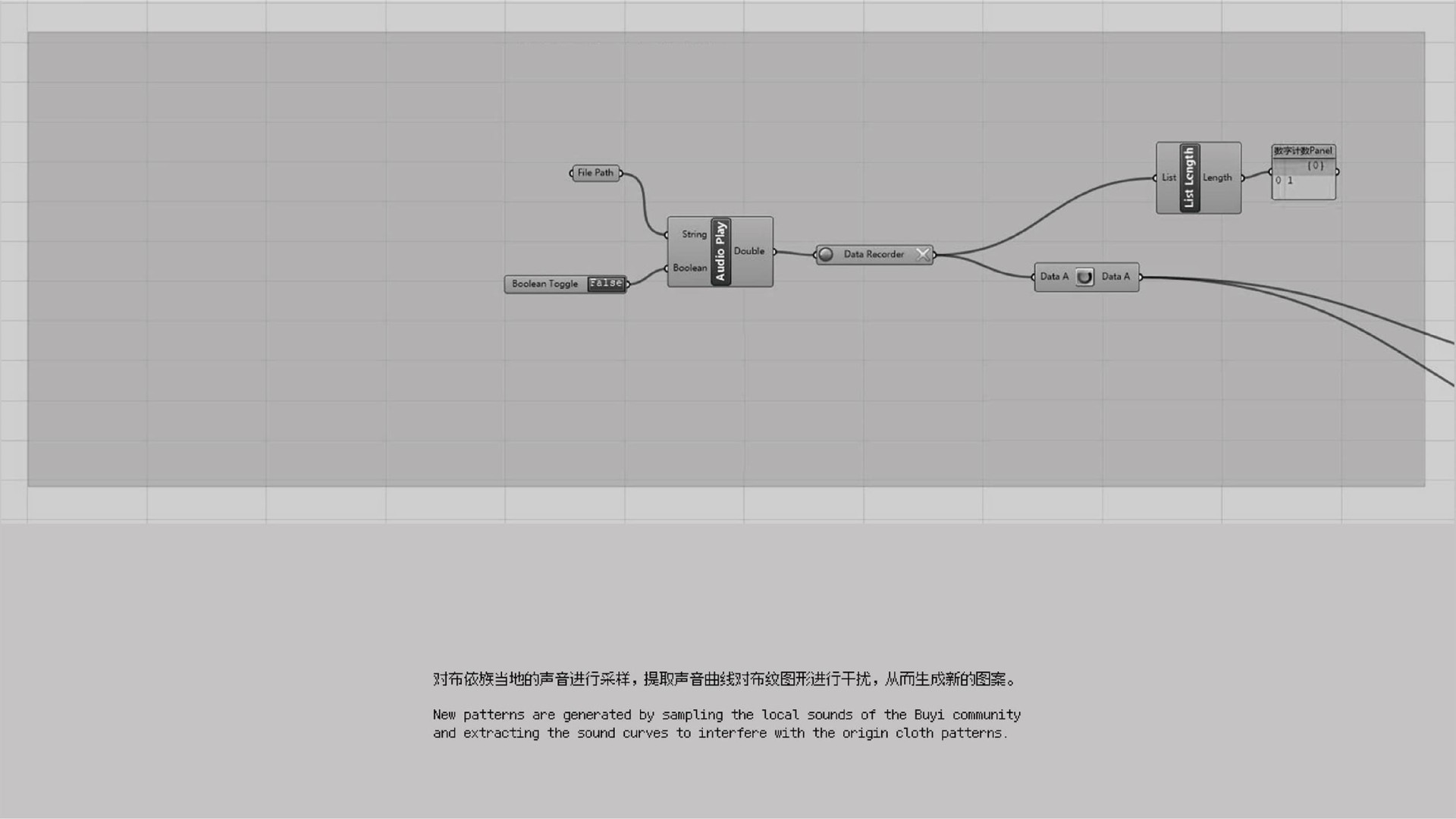
We collected these field recordings not to produce a record, but to extract sound curves: pitch, amplitude, frequency and rhythm. These curves were then used to perturb the woven patterns. Low, sustained tones produced gentle arcs; high, soaring melodies gave rise to sharper peaks; the steady rhythm of the loom became a series of parallel waves, each subtly undulating.
We mapped segments of sound onto variations in colour intensity, the scale of individual blocks, and the density of their arrangement. The previously quiet checkered grid pattern began to “speak”. Its squares shifted with the rise and fall of the melodies, while its colours alternated in depth according to the rhythm of the loom. Sound became input; pattern became output. We listened to the songs of the Bouyei people, then sought to make the songs themselves visible.

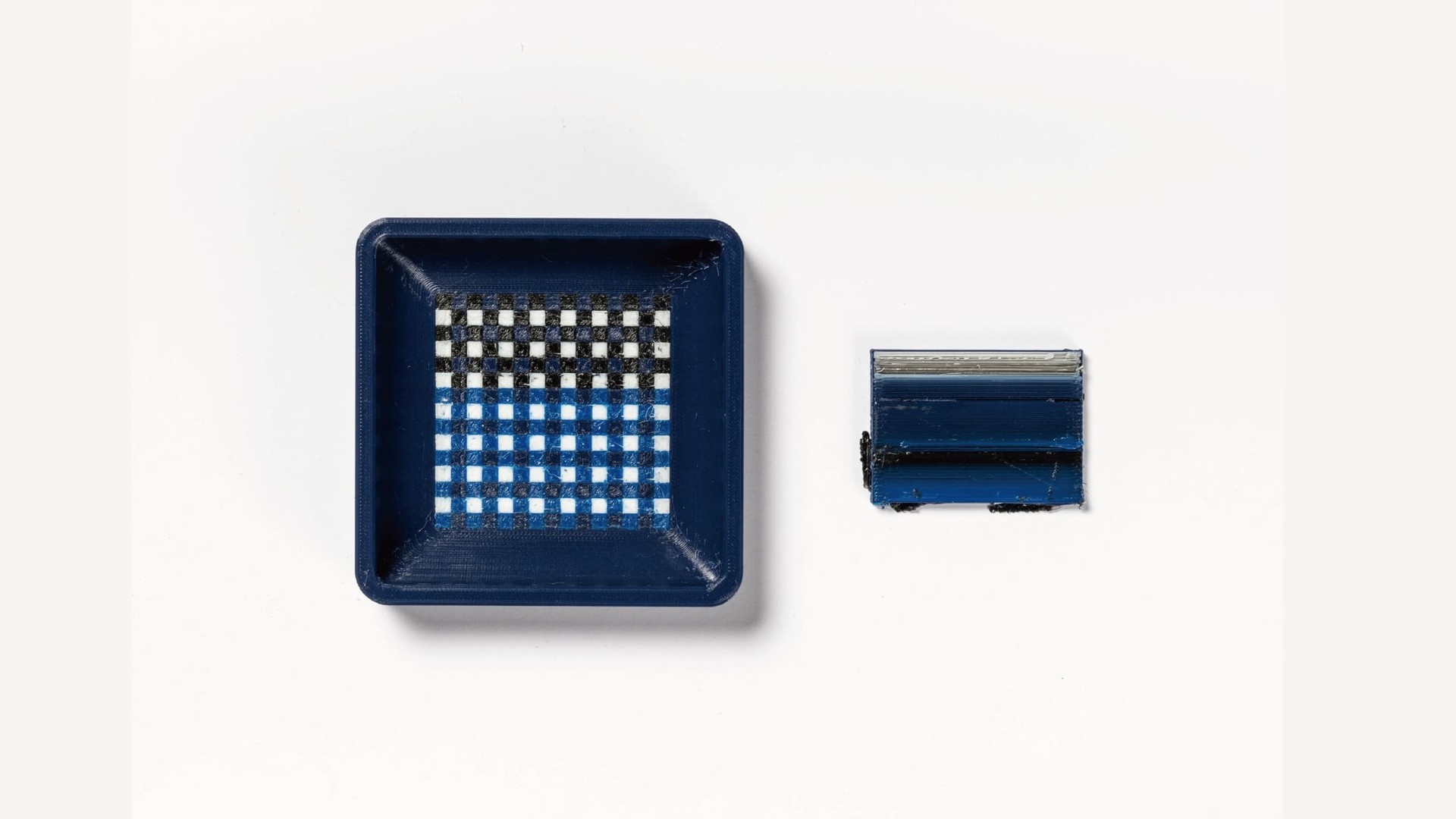

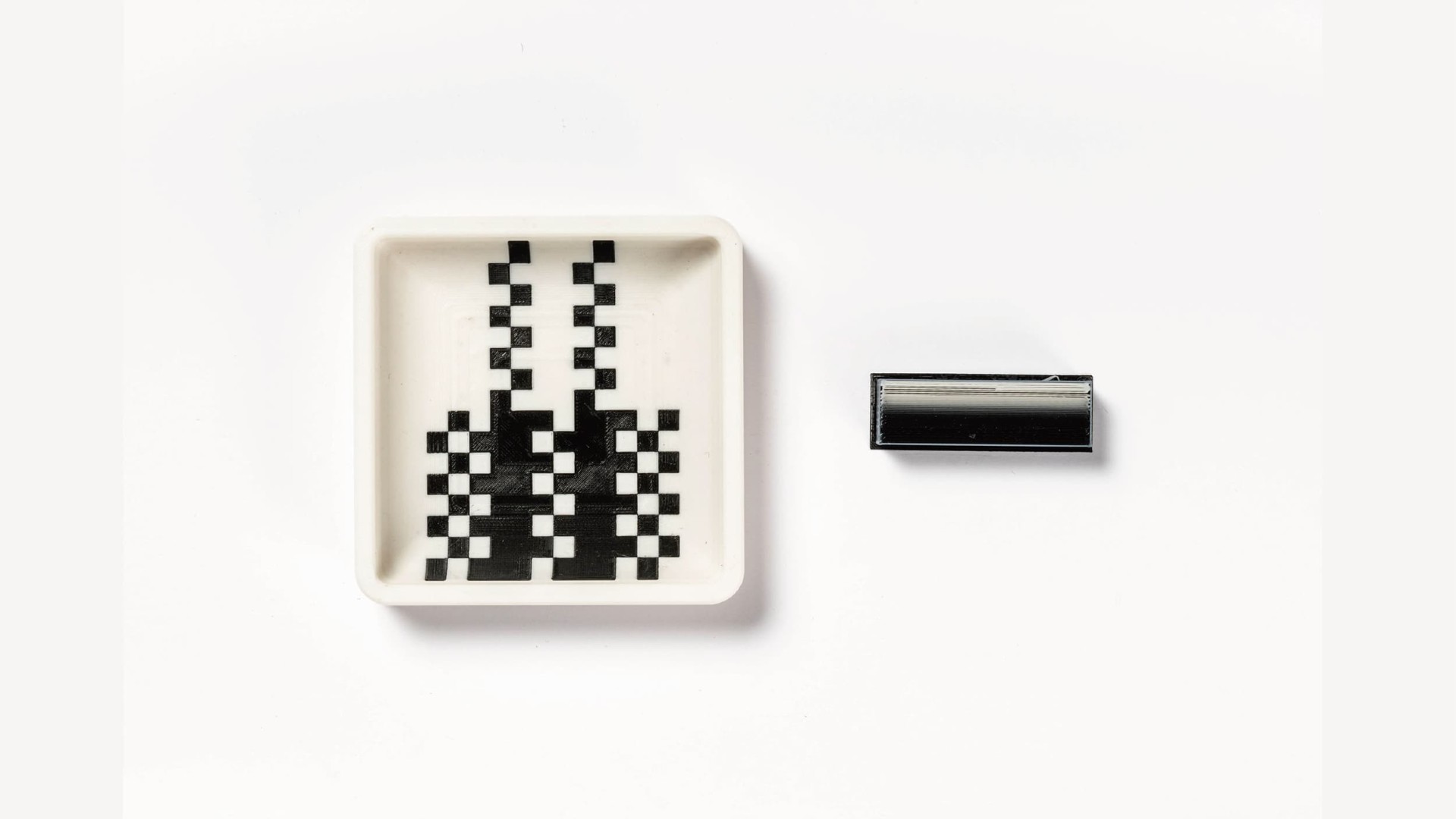


The results could not be fully predicted. Some patterns were graceful and harmonious; others resembled disordered images disrupted by interference. Yet occasionally, in a few brief moments, as I looked at a pattern appearing on the screen, I could almost hear again the song captured in the original recording. The image did not directly depict the song, but seemed to carry something of its particular rise and fall, its rhythm of breathing.
Within industrial systems, errors are usually understood as things to be eliminated. Tolerances are tightened and acceptable production rates continually improved. In NONGZAO's practice, however, we began to reconsider results that did not unfold entirely as expected. Could they only be regarded as defects?
During 3D printing, deviations in the machine can produce unexpected forms. A blocked nozzle interrupts the flow of filament, leaving dry‑brush‑like traces. An unlevelled build plate causes successive layers to shift slightly, resembling geological faults brought together again after the movement of the earth's crust. Fluctuations in temperature create tiny bubbles across the surface, which become mottled, matte marks after cooling.
Outside the logic of production lines that pursue standardised precision, these unplanned deformations can sometimes leave behind another kind of material expression.
In handweaving, the force applied by a weaver with each pass of the shuttle can never be entirely consistent, nor can every length of cotton thread be perfectly uniform. It is precisely these subtle irregularities that give handwoven cloth a sense of breath and life that machine‑made fabric struggles to reproduce. As light falls across the gently undulating surface, the cloth reveals a vitality of its own.


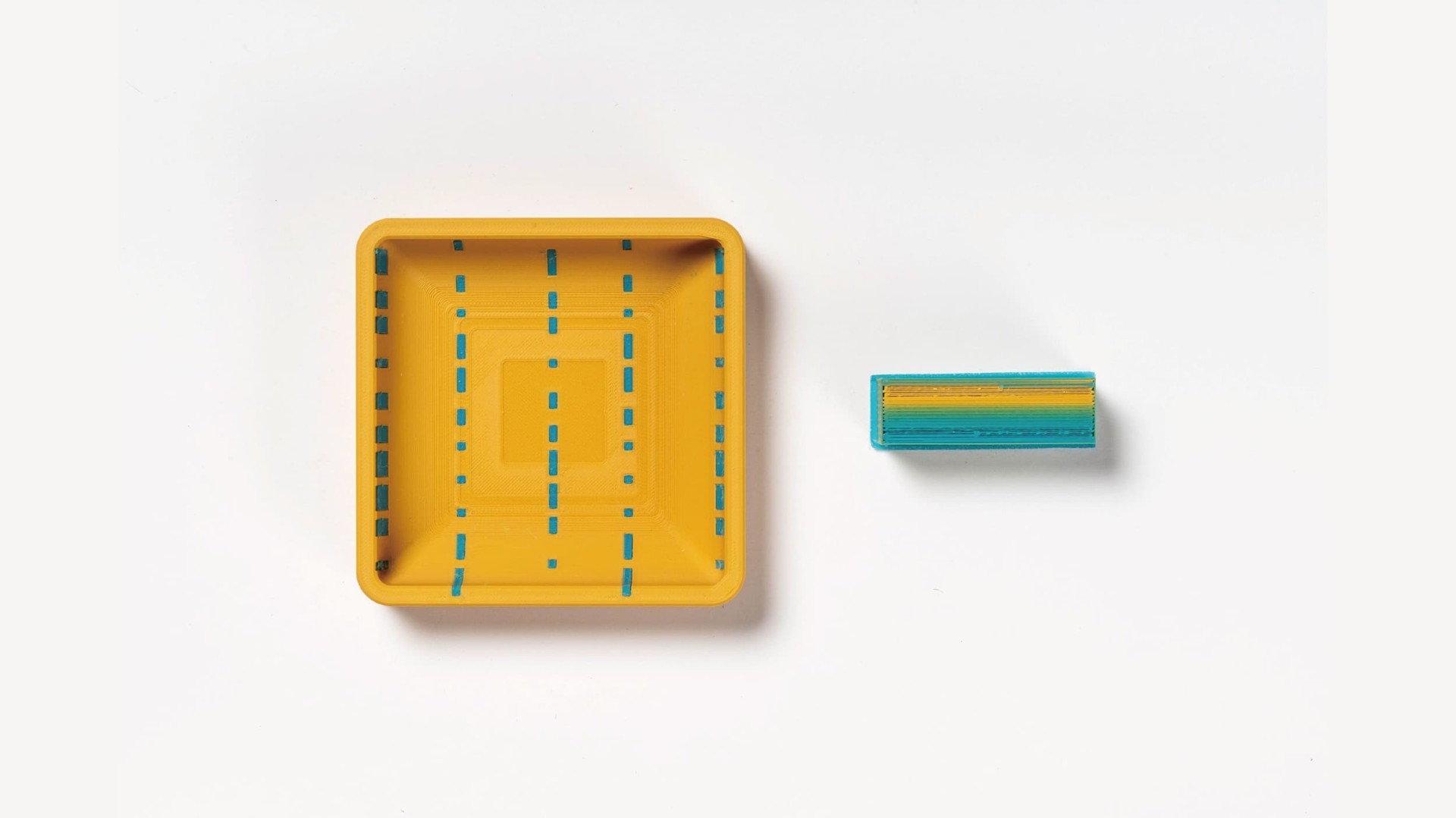


We picked up the misprinted objects and touched the protrusions, indentations, strands and fractures that should not have been there. They did not resemble standardised industrial products. In certain places, they felt closer to something handmade — as if a weaver had mistakenly crossed a thread, then simply continued weaving. The mistake remained in the cloth, becoming an unplanned part of the whole.
Not every deviation is worth keeping. Some simply compromise the structure; others may open up new possibilities for expression. The question is not how to make errors seem beautiful, but whether we can recognise something within them that is worth pursuing further.
The aim of digital weaving is not to use machines to imitate the perfection of handwork, but to discover a “hand” of its own in the machine. This sense of touch can also be understood as the distinctive traces left when materials encounter forces and pass through processes of transformation. The machine's own material character may lie precisely in those edges and irregularities that standardised production lines usually discard.


VI · Experiment and Response
An experiment does not have to succeed. The act of experimenting is itself a response.
We have no intention of romanticising errors, nor are we simply indulging in chance. We believe that in a desert of absolute precision, an accident can be a spring.
These experiments have led me to reconsider the place of design. When engaging with a traditional craft, design is only a means and a medium. What truly deserves to be seen and valued are the individual people behind the project: their attachment to the land and to their way of life, and the longing rooted deep within them that has never disappeared.
Design begins with the intention of solving problems, but before a problem can be addressed, we must first understand where it comes from. The deeper the understanding, the more likely a response is to reach its heart. This is not merely a design method; it also concerns the position from which design should act.
Design is never limited to form, function and aesthetics. It is also about how we see the world. Will each thing I create make life better or worse for the living beings on this land?
Bringing contemporary digital technologies into traditional weaving and exploring new paths for design is an ongoing direction of NONGZAO's practice. The aim is not to be novel for novelty's sake, but to test the boundaries of what already exists. The continuation and transformation of folk art involve more than preserving techniques and materials. They also depend on whether its cultural essence and underlying spirit can continue to grow.


Techniques may be lost, and materials may be exhausted. Yet as long as the spirit remains, folk art may still find a way to begin again. The digital weaving experiments are not simply about preserving the appearance of a particular woven pattern. They seek to sustain the most fundamental act of weaving itself.
The thread connecting people with the land, labour with creation, has not been severed. It continues to change form as times change. Through design as a medium, and technology as a means, traditional craft can find new ways of expressing itself. This expression is an experiment in what the future might hold.
As contemporary civilisation continually reinvents itself, people often find themselves uncertain about the meaning of life. Folk traditions rooted in the land are ways our ancestors discovered, through the daily repetition of labour, to find their place in the world and remain connected to the earth. Earth is earth, wood is wood, and thread crosses thread in an ordered pattern. This unadorned authenticity may still have something to offer the way we live today.
We are not concerned solely with preserving old objects, nor are we content simply to create new ones. We stand in the space between tradition and modernity, returning again and again to one of the oldest and most enduring questions: How should we live?
The question is too large for digital weaving to answer. It is only an experiment in design.
An experiment does not have to succeed. The act of experimenting is itself a response.
Project period: June 2022 – October 2024