
NONGZAO Practice • Chewing into Reality
“Memory can be designed and brought into contact with the future.”
Original Text | Xu Gang • NONGZAO Field Notes


In the age of big data, more and more of our attention is migrating online. Emotions, time and desire are continually drawn into virtual space. Our behaviour and thinking become increasingly fragmented, reduced to immediate, almost reflexive responses. Amid streams of information that offer little in the way of meaningful engagement, our capacity to perceive is divided rather than nourished. Our experience of the physical world is steadily being squeezed out.
We cannot live in the cloud alone. Returning to the physical world—to things within reach that have become part of our embodied memory—is one way of resisting this drift towards virtuality.
How might we reawaken genuine feeling and memory? Food offers a direct point of entry. It connects nature with the body, and people with one another.


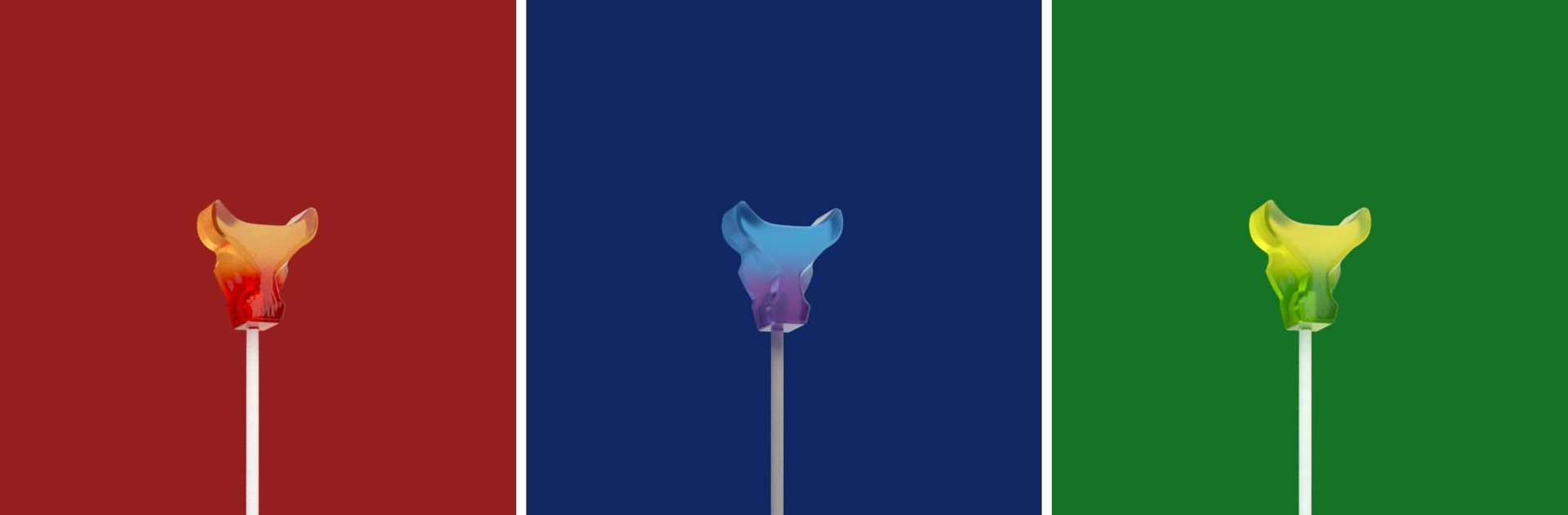

More than ten thousand years ago, human beings brought their long migrations to an end and began to settle. The dawn of civilisation emerged through the exploration of agriculture. When the first seed was deliberately placed in the soil, people began to observe the relationship between the seasons and the harvest. An unprecedented journey had begun. Among all the bricks and stones that make up the edifice of civilisation, food is one of the most elemental, the most ordinary, and the most deeply embedded in our bodies and emotions.
Cooking may be one of the oldest design practices on Earth. By selecting ingredients, controlling heat, and transforming form and texture, people turn what nature provides into food suited to bodily needs, everyday life and culture. At a fundamental level, this is no different from the logic underlying the design practices that came later.
Today, food has long since moved beyond the satisfaction of hunger. It has become a form of creative expression. The material reality it carries takes on particular significance in the digital age. As the physical world recedes and fragmented streams of information consume our attention, the tactile and sensory qualities of food offer a bridge between the virtual and the real.
Food design is now emerging as a wider trend. Its intersection with technology and art responds to the conditions of contemporary life: using the most ordinary sensory experiences to draw people back into the real world. Food design is becoming a new frontier for design.


It was in this context that the NONGZAO Food Project was formally proposed. In 2019, the 3D-printed mooncake developed by NONGZAO became its first step.
The choice of a mooncake was far from arbitrary. As a traditional food associated with the seasonal calendar, it carries memories of reunion, moon worship and the turning of the seasons. A food whose form and cultural meaning are relatively fixed was given a futuristic visual expression through 3D printing.
The mooncake’s exposed structure is formed by the walls of geometric cells. Arranged in regular patterns both vertically and across a plane, these units give the interior of the food an organisation quite different from that of a conventional mooncake. Through this, we explored how structural variation might affect perception in the mouth. When regularity and irregularity, familiarity and unfamiliarity coexist in the experience of chewing, might the food produce a sensory experience that asks to be understood anew?
As 3D printing offered ways to reconfigure the structure of food, a more far-reaching question emerged: in a time when technology is reshaping everything, what else might food become?


The more ordinary an experience, the more deeply it can become embedded in our memory. A taste, a smell, even a familiar texture can bring back emotions associated with a particular period of life. Memory does not reside in the mind alone. It is also bound up with bodily perception, repeated actions and the specific circumstances of everyday life.
From this perspective, food design can also be a form of designing for memory. Rather than simply reproducing the flavours and forms of the past, it can reorganise the relationship between people and food through materials, structures, sensory experiences and cultural associations. When something familiar encounters an unfamiliar form, existing memories may be stirred again, while new understandings may begin to emerge.
The geometric structure of the 3D-printed mooncake was an attempt to do just this: to place the sensory memory of the Mid-Autumn Festival and the traces of traditional food culture inside a futuristic shell. Beyond satisfying a physiological need, food can become a vehicle for memory and emotion through its technological forms and structures, offering another way for people to form connections with the material world.

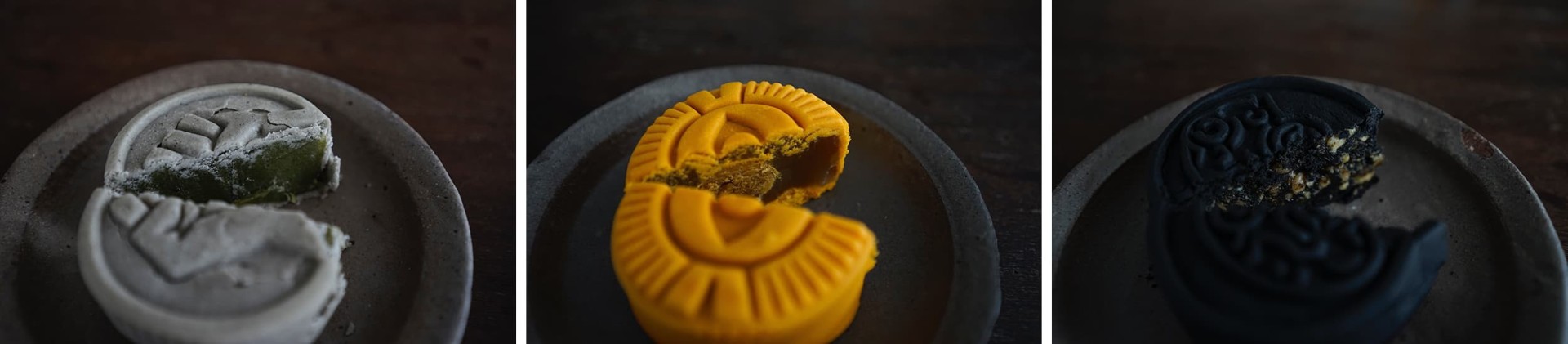


We understand food design not simply as the innovation of form, nor merely as an isolated product category, but as an open system involving questions of biotechnology, agricultural development, food culture and human health. Using design as a tool for research, it creates forms of experience that can engage a wider public and reawaken the senses and memory.
It responds to the estrangement brought about by the virtual world with the act of chewing something real—calling us back from the cloud to the earth.
From traditional seasonal foods to the structural reconfiguration made possible by 3D printing; from sensory estrangement in digital life to the bodily experience of chewing something real—we sought to move beyond established boundaries of perception and reconsider the relationships between food and technology, memory and the future.
Memory is not merely a trace left by the past. It can be reawakened and reinterpreted through new experiences, forming connections with lives that have yet to unfold.
How will the technologies and tools of the future change the way we eat? As the forms, textures and methods of making food continue to evolve, how will we learn to perceive it, understand it and form relationships with it anew?
These questions form the starting point for the NONGZAO Food Project’s ongoing exploration.
— Practice Period: June – September 2019